
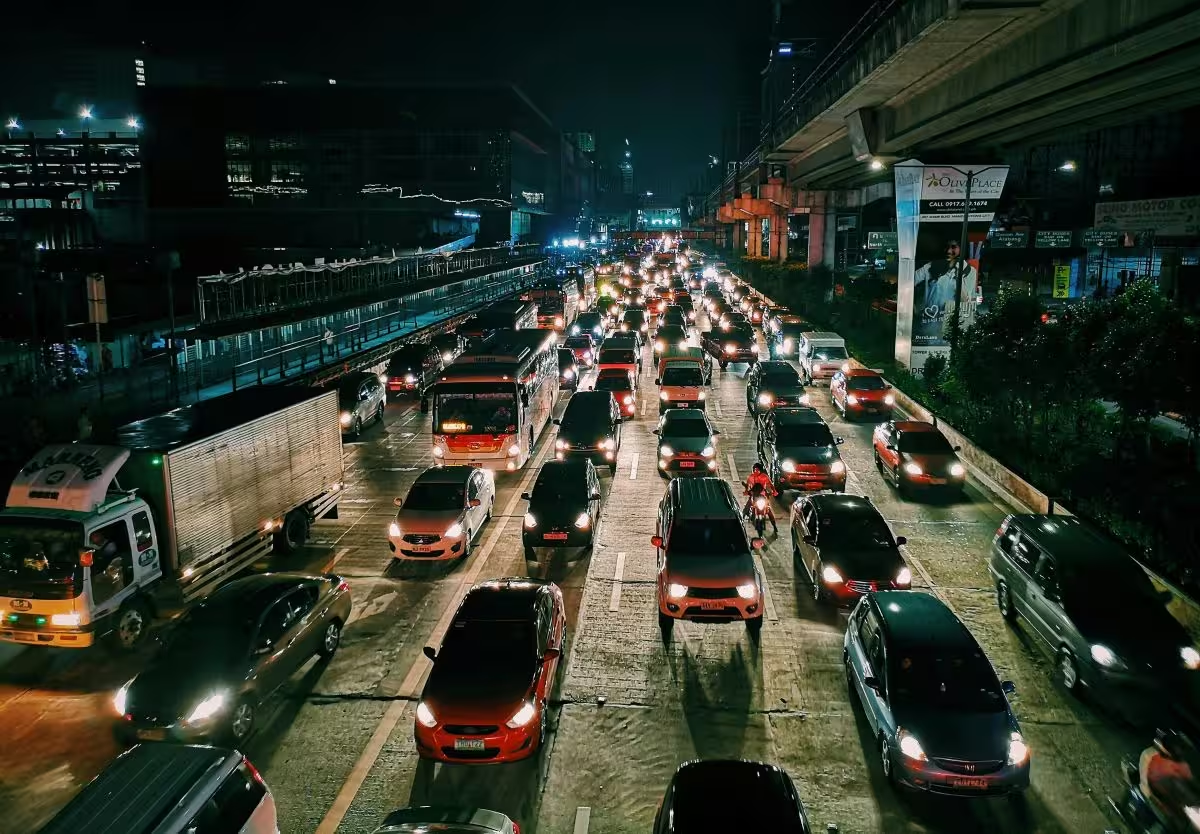
Vehicle-to-Everything (V2X): How Vehicles Communicate with Infrastructure
TechnoVita.net
Vehicle-to-Everything (V2X) is a key technology within smart mobility that enables vehicles to communicate with their surroundings in real time. By exchanging data with infrastructure, other vehicles, pedestrians, and networks, V2X improves road safety, traffic efficiency, and driving comfort. As cities become smarter and mobility more connected, V2X is increasingly seen as a cornerstone of future transportation systems.
What Is V2X?
V2X is an umbrella term for communication technologies that allow vehicles to send and receive information beyond the vehicle itself. It includes several subtypes:
- V2V (Vehicle-to-Vehicle): communication between vehicles
- V2I (Vehicle-to-Infrastructure): communication with traffic lights, road sensors, and signs
- V2P (Vehicle-to-Pedestrian): communication with pedestrians via smartphones or wearables
- V2N (Vehicle-to-Network): communication with cloud services via mobile networks
Together, these systems create a digital awareness layer around vehicles, enabling them to anticipate and respond to road conditions more intelligently.
How Vehicles Communicate with Infrastructure
In a V2I scenario, vehicles exchange data with roadside infrastructure using dedicated short-range communication (DSRC) or cellular technologies such as C-V2X and 5G. Information commonly shared includes:
- Traffic light status and remaining signal time
- Road works and lane closures
- Speed limits and temporary restrictions
- Weather and road surface conditions
This data is processed either directly in the vehicle (edge computing) or via centralized traffic management platforms.
Practical Example: Smart Traffic Lights
A practical V2I example is the use of smart traffic lights. When a vehicle approaches an intersection, the traffic light can transmit its current phase and timing. The vehicle’s navigation system then advises the driver—or an autonomous system—on the optimal speed to catch a green light.
Benefits:
- Reduced stop-and-go traffic
- Lower fuel consumption and emissions
- Improved traffic flow during peak hours
Emergency vehicles can also request priority, allowing traffic lights to switch to green automatically and reduce response times.
Practical Example: Hazard and Collision Warnings
With V2V communication, vehicles can warn each other about hazards beyond the driver’s line of sight. For example, if a car brakes suddenly due to an accident or slippery road conditions, nearby vehicles receive an immediate alert.
Real-world impact:
- Earlier warnings than human reaction time
- Fewer rear-end collisions
- Increased safety in poor visibility conditions
This is particularly valuable on highways and in adverse weather.
Practical Example: Protecting Vulnerable Road Users
V2P communication helps protect pedestrians and cyclists. A pedestrian’s smartphone can transmit location data to nearby vehicles, while vehicles send warnings if a collision risk is detected.
Use case:
- A cyclist approaching a blind intersection triggers an alert in a vehicle’s dashboard
- The driver is warned before visual contact is possible
This technology is especially relevant in dense urban environments.
Benefits for Cities and Road Authorities
For municipalities, V2X provides access to real-time traffic data that supports smarter mobility policies. Cities can:
- Dynamically manage traffic congestion
- Optimize road maintenance planning
- Reduce emissions through smoother traffic flow
- Improve overall road safety
V2X also supports long-term goals such as autonomous transport and zero-emission zones.
Challenges and Considerations
Despite its potential, V2X faces several challenges:
- Interoperability: vehicles and infrastructure must follow common standards
- Cybersecurity: communication must be secure to prevent misuse
- Privacy: location and vehicle data require careful handling
- Investment: infrastructure upgrades are costly and complex
Addressing these issues is essential for large-scale adoption.
Conclusion
Vehicle-to-Everything communication transforms vehicles from isolated machines into connected participants in a broader mobility ecosystem. By enabling real-time interaction between vehicles and infrastructure, V2X enhances safety, reduces congestion, and supports sustainable transport solutions. As smart cities continue to evolve, V2X will play a central role in shaping the future of mobility.
You can read all comments, but you must log in to post or reply.
No comments yet. Be the first to react!