
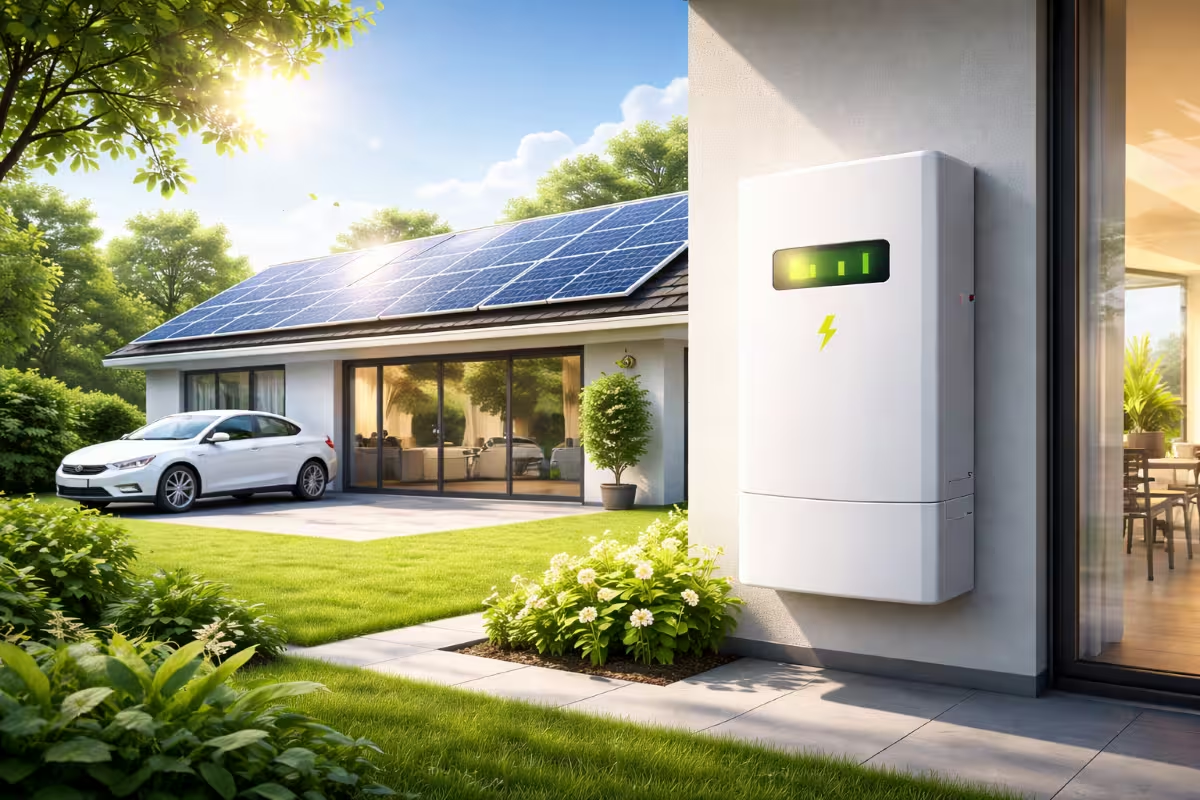
The Future of Home Energy: Cutting-Edge Battery Technologies for Residential Storage
TechnoVita.net
As renewable energy becomes a cornerstone of modern power systems, storing that energy efficiently at home is rapidly evolving. Today’s advanced battery technologies are transforming how households capture, save and use electricity—making homes more self-sufficient, resilient, and greener than ever before.
Why Home Energy Storage Matters
With the rising adoption of solar panels and fluctuating electricity prices, storing power on-site has moved from a niche concept to an essential part of residential energy planning. Home battery systems let homeowners store excess energy generated by solar panels during the day and use it when the grid is expensive or offline. This not only cuts energy bills but also reduces stress on the electric grid and supports wider renewable energy use.
Leading Battery Technologies in 2025–2026
1. Lithium-Iron Phosphate (LFP) Batteries
Lithium-iron phosphate (LFP) chemistry has become one of the most widely deployed technologies for home energy storage due to its enhanced safety, long cycle life, and lower cost compared with traditional lithium-ion types. These batteries can endure thousands of charge-discharge cycles—often lasting over a decade with minimal degradation.
Many residential units now use LFP cells to provide reliable backup during outages and to maximize solar self-consumption. Advanced battery management systems also help prevent overheating and extend operational life.
2. Solid-State Batteries: Next Generation Storage
Solid-state batteries replace the liquid electrolyte found in conventional lithium-ion cells with a solid material. This shift promises higher energy density, increased safety, and longer lifespan, significantly shrinking size and fire risk—key considerations for indoor installations. While still emerging at the residential scale, solid-state technology is widely expected to arrive in the market within the next few years as production scales up.
3. Flow and Water-Based Battery Systems
Flow batteries, including those using water-based electrolytes, are gaining interest for home and community storage thanks to scalability and durability. Unlike solid batteries, they store energy in liquid solutions pumped through cells, enabling longer discharge times and extended calendar life.
Recent research breakthroughs have improved ion selectivity and efficiency, making these systems more feasible for residential use—not just industrial scales. Such innovations could bridge seasonal gaps in renewable generation.
4. Thermal Energy Storage
Not all energy storage is electrochemical. Thermal batteries store heat instead of electricity—often integrating with home heating systems like heat pumps. These systems can store excess solar energy as heat and release it on demand, reducing grid dependence and smoothing temperature control in homes. New residential thermal storage systems with improved insulation and efficiency are hitting the market, offering 20–29 kWh of thermal storage capacity.
Practical Innovations and Real-World Applications
Plug-and-Play Rental-Friendly Batteries
New modular battery products are opening the door for renters and homeowners alike to adopt energy storage without rewiring or major installation work. Some plug-and-play systems can automatically provide backup power during outages and support essential loads like refrigeration—making battery backup accessible beyond owned homes.
Modular Whole-Home Backup Systems
Brands are now offering scalable “whole-home” systems that can be expanded with additional battery modules to support larger energy demands. Recent commercial releases include systems that can power entire households for days during outages and support dozens of circuits, giving households true energy independence when grid power fails.
Smart Energy Management Integration
State-of-the-art home storage solutions increasingly integrate intelligent energy software that predicts solar production, manages charging based on time-of-use electricity rates, and optimizes storage for the homeowner’s patterns. These features help users reduce bills and avoid peak pricing while smoothing demand on the grid.
Looking Ahead: What’s on the Horizon
The home energy storage landscape is poised for further breakthroughs. Sodium-ion batteries are emerging as a lower-cost alternative with strong temperature performance, while AI-enhanced energy management is making systems more autonomous and efficient. Continued innovation in materials and system design will likely make home storage ever more safe, affordable, and powerful.
Conclusion
From safer, longer-lasting lithium chemistries and upcoming solid-state systems to innovative flow and thermal storage solutions, the latest home battery technologies are reshaping how we capture and use energy. With products that are more affordable, modular, and intelligent than ever, homeowners have unprecedented control—turning homes into clean, self-sufficient micro-power plants capable of supporting a decarbonized future.
You can read all comments, but you must log in to post or reply.
No comments yet. Be the first to react!