
Green Hydrogen Developments: How Innovation Is Turning a Clean Energy Promise into Reality
TechnoVita.net
Green hydrogen has long been presented as a future solution for sectors that are difficult to decarbonise, such as heavy industry, shipping and long-distance transport. Produced by splitting water using renewable electricity, it offers a pathway to climate-neutral energy without direct carbon emissions. For years, however, green hydrogen remained largely confined to pilot projects and policy roadmaps. That picture is now starting to change.
Across Europe, Asia and parts of the Middle East, green hydrogen is slowly moving from ambition to implementation. While challenges remain, recent technological improvements and early commercial applications suggest the sector is entering a more mature phase.
From Strategy to Scale
Globally, hydrogen demand today is still dominated by fossil-based production, mainly used in refining and chemical processes. Green hydrogen represents only a small share of total supply. Yet momentum is building. Governments increasingly view green hydrogen as a strategic complement to electrification, especially where direct use of electricity is not feasible.
One major shift is the move from national strategies to concrete investment frameworks. Public funding mechanisms, long-term offtake agreements and carbon pricing are beginning to reduce uncertainty for developers. At the same time, industrial players are showing greater willingness to commit to hydrogen as part of long-term decarbonisation plans, particularly in steelmaking, fertilisers and synthetic fuels.
Technology: Improving Efficiency and Lowering Costs
At the heart of green hydrogen production lies electrolysis. Recent progress in electrolyser technology has focused on improving efficiency, durability and scalability. Manufacturers are developing larger systems, optimised for variable renewable power, while research efforts are reducing reliance on scarce materials.
Scaling up manufacturing is especially important. As electrolyser production volumes increase, costs are gradually declining. This learning-by-doing effect mirrors earlier developments in wind and solar energy, although hydrogen systems remain more complex and capital-intensive.
Another important trend is integration. Instead of treating hydrogen as a standalone sector, developers increasingly connect electrolysers directly to renewable generation, storage and industrial demand. This systems approach improves overall efficiency and reduces grid congestion.
In Focus: A Practical Innovation in the Netherlands
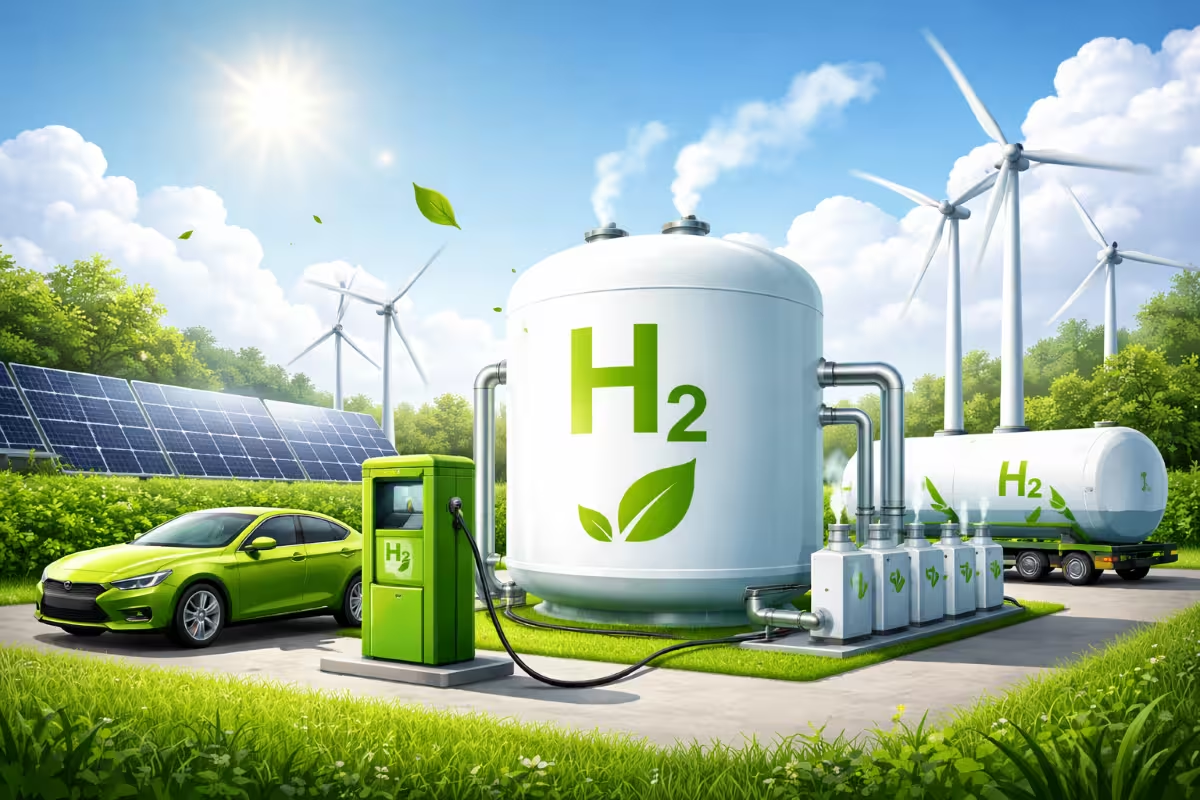
A notable practical development can be seen in the Netherlands, where a mid-scale electrolyser is being directly coupled to a local renewable energy source. Rather than feeding all electricity into the grid, surplus solar or wind power is converted on site into hydrogen.
This approach addresses two challenges at once: it limits renewable energy curtailment and produces clean hydrogen close to end users. The hydrogen can then be used for industrial processes, mobility or seasonal energy storage. While the project itself is modest in size, it demonstrates how decentralised hydrogen production could complement large, centralised facilities in the future energy system.
Key Numbers at a Glance
- Global green hydrogen production today: less than 1 million tonnes per year
- Potential production by 2030: 25–50 million tonnes annually
- Electrolyser manufacturing capacity: growing from tens of gigawatts today to several hundred gigawatts by the early 2030s
- Current production costs: roughly €3–5 per kilogram
- Expected cost range by 2030: €1–3 per kilogram, depending on electricity prices and scale
Remaining Barriers
Despite the progress, green hydrogen is not yet a guaranteed success story. High upfront investment costs, slow permitting procedures and limited infrastructure for transport and storage remain significant barriers. Moreover, many announced projects have yet to reach final investment decisions.
Perhaps the most critical factor is demand. Without clear, long-term demand from industry and transport, large-scale hydrogen production will struggle to become economically viable. Policy instruments that create stable markets—such as quotas, contracts for difference or carbon-based product standards—will be essential.
Conclusion
Green hydrogen is no longer just a concept on policy slides. Technological improvements, early commercial projects and falling costs indicate that the sector is entering a new phase. Practical initiatives, such as decentralised hydrogen production linked directly to renewable energy, show how hydrogen can play a realistic role in a low-carbon energy system.
At the same time, expectations must remain grounded. Green hydrogen will not replace direct electrification, nor will it scale overnight. Its future depends on targeted use, sustained policy support and continued innovation. If those conditions are met, green hydrogen could become a crucial building block in the transition to a climate-neutral energy system.
You can read all comments, but you must log in to post or reply.
No comments yet. Be the first to react!