
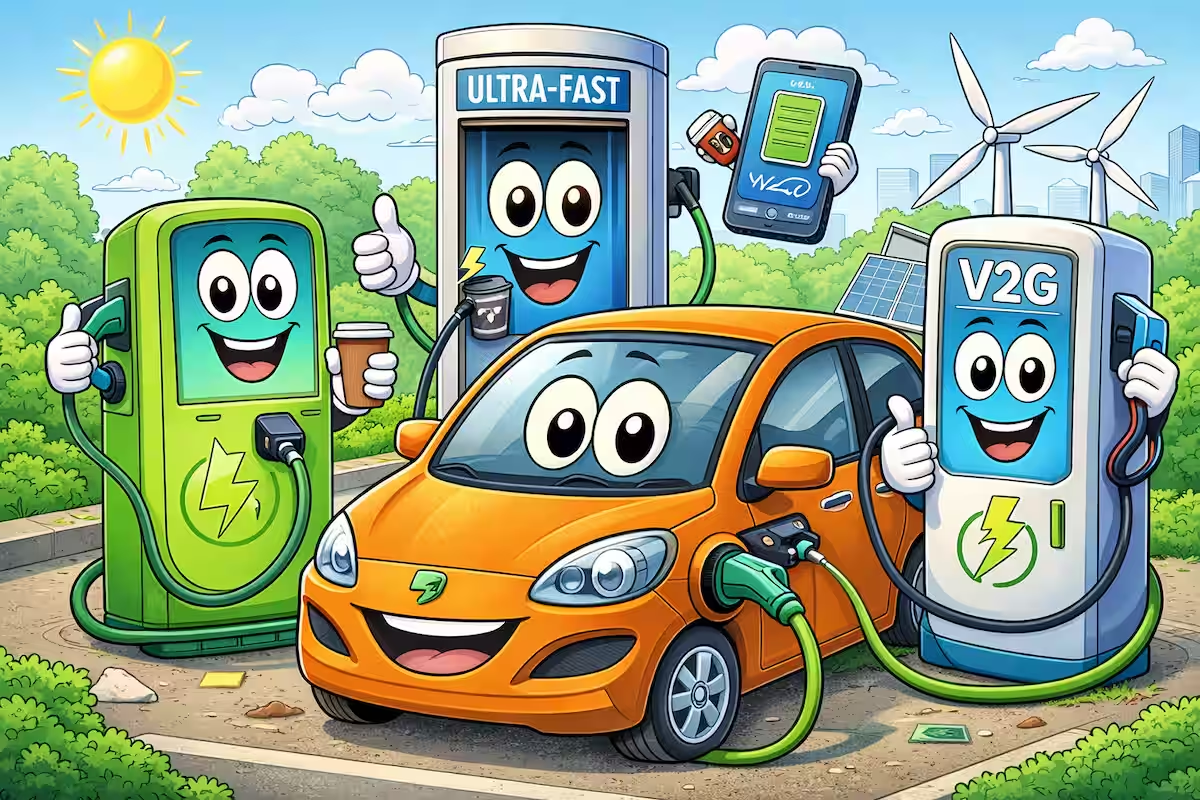
Electric vehicles and charging infrastructure powering the future of mobility
TechnoVita.net
Electric Vehicles and Charging Infrastructure Driving the Future of Mobility
The transition to electric mobility is accelerating worldwide, and with it comes a growing need for reliable and intelligent charging infrastructure. As more households and businesses switch to electric vehicles (EVs), the availability, speed, and efficiency of charging solutions have become essential components of modern transportation systems. This development is not only driven by climate goals, but also by rising fuel costs, technological innovation, and government policies encouraging cleaner mobility.
The Rapid Growth of Electric Vehicles
Electric vehicles are no longer a niche product. Across Europe and many other regions, EV adoption has increased significantly in recent years. Governments are setting ambitious targets to phase out internal combustion engine vehicles, while manufacturers continue to expand their electric model ranges.
Consumers are increasingly attracted to EVs due to lower operating costs, reduced emissions, and improved driving performance. However, for electric mobility to truly replace traditional transport, a robust and accessible charging network is essential.
The Importance of Charging Infrastructure
Charging infrastructure is the backbone of electric mobility. Without sufficient charging points, drivers may experience “range anxiety,” which can slow down adoption. To address this, countries are investing heavily in public and private charging networks.
Charging infrastructure can be divided into several categories:
- Home charging for daily convenience
- Workplace charging to support commuting
- Public charging stations in cities and neighborhoods
- Fast and ultra-fast chargers along highways for long-distance travel
A well-balanced mix of these solutions ensures that EV drivers can charge their vehicles easily and efficiently in different situations.
Fast Charging and Ultra-Fast Charging Networks
One of the most important developments in recent years is the expansion of fast and ultra-fast charging networks. These systems can charge an electric vehicle in a fraction of the time compared to standard chargers, making long-distance travel more practical.
Fast charging stations are increasingly located along highways and major transport routes. Ultra-fast chargers can add hundreds of kilometers of driving range in less than 30 minutes, making EV travel more comparable to refueling a traditional car.
Smart Charging and Energy Integration
As the number of EVs grows, so does the impact on the electricity grid. Smart charging solutions are designed to balance energy demand and prevent grid overload.
Smart charging systems can:
- Adjust charging speed based on grid capacity
- Use renewable energy when available
- Charge vehicles when electricity prices are lower
An important innovation in this area is bidirectional charging, also known as Vehicle-to-Grid (V2G). This technology allows EVs to return electricity to the grid, effectively turning cars into mobile energy storage units. This can help stabilize the grid and support the integration of renewable energy sources such as wind and solar power.
Is Electric Mobility Sustainable?
Electric mobility is generally considered more sustainable than traditional fossil-fuel-based transport, especially when powered by renewable energy. EVs produce no tailpipe emissions and contribute to improved air quality in urban areas.
However, sustainability also depends on battery production, raw materials, and electricity generation. Ongoing innovation in battery recycling and cleaner production methods is helping to improve the overall environmental performance of EVs.
Advantages of EV Charging Infrastructure
- Reduced emissions and cleaner air
Electric vehicles produce fewer emissions, improving urban air quality. - Lower operating costs
Electric driving is often cheaper than fuel-based driving. - Energy flexibility
Smart charging and V2G help balance supply and demand in the energy system. - Innovation and economic growth
The EV ecosystem creates new business opportunities and jobs.
Challenges and Considerations
- Grid capacity and congestion
The electricity grid must be upgraded to handle increased demand. - Investment costs
Installing large-scale charging infrastructure requires significant investment. - Charging availability and accessibility
Equal access in rural and urban areas remains a challenge. - Charging time compared to refueling
Although improving, charging still takes longer than traditional refueling.
Conclusion
Electric vehicles and charging infrastructure are central to the future of sustainable mobility. As technology advances and infrastructure expands, electric mobility is becoming more accessible, efficient, and environmentally friendly. While challenges remain, the continued development of smart charging solutions and renewable energy integration will play a crucial role in shaping a cleaner and more resilient transportation system.
- Charging speed: Modern ultra-fast chargers can deliver up to 350 kW, allowing some EVs to gain 200–300 km of range in 15–20 minutes.
- Network growth: Europe now has over 70,000 public fast-charging points, with countries like Germany and the Netherlands leading in density.
- Usage trends: Around 30–40% of public charging sessions in Europe are now at fast or ultra-fast stations, showing increasing reliance on rapid charging for long-distance trips.
- Cost per kWh: Fast charging is usually more expensive than home charging, typically ranging between €0.40 and €0.80 per kWh, depending on network and location.
- Battery compatibility: Not all EVs can handle ultra-fast charging; current technology limits most vehicles to 100–250 kW maximum to protect battery health/li>
- Grid impact: Widespread fast charging can increase local electricity demand by 2–5 MW per site, making smart energy management critical.
You can read all comments, but you must log in to post or reply.
No comments yet. Be the first to react!