
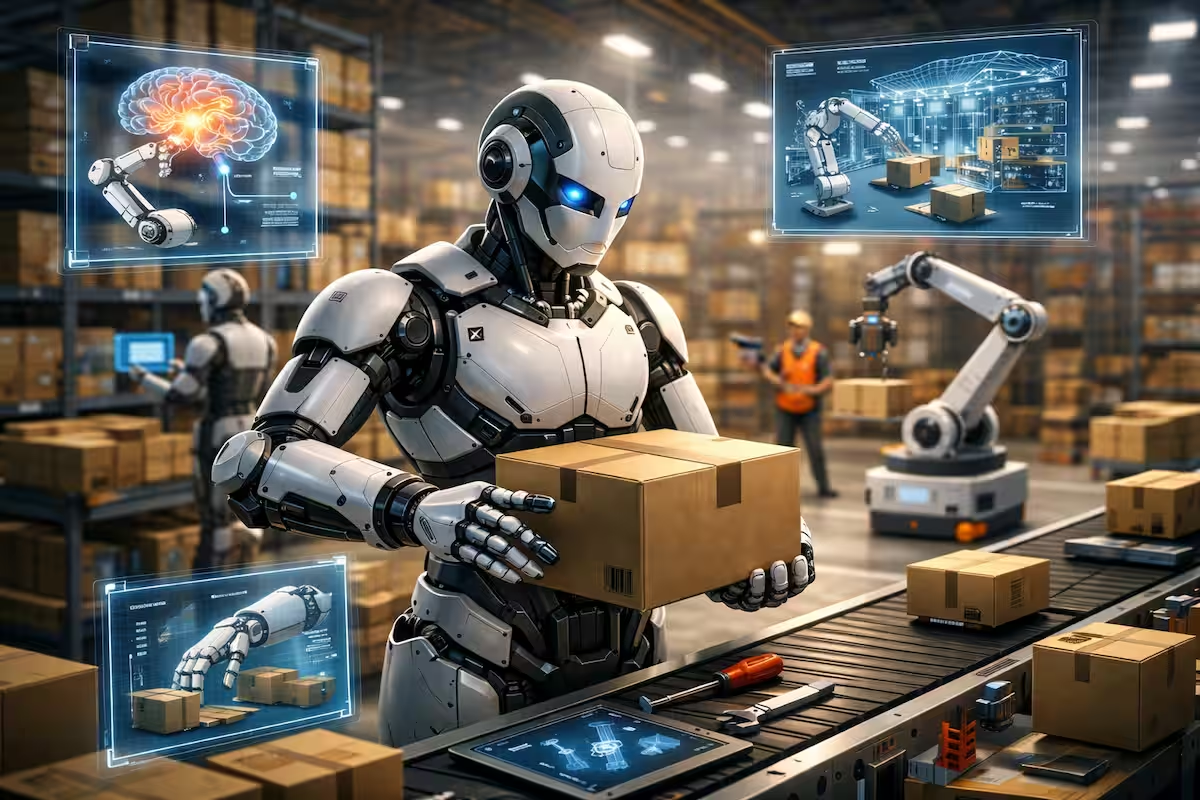
Physical AI brings robots into the real world
TechnoVita.net
Introduction: From Screens to Reality
For decades, artificial intelligence has lived behind screens: analyzing data, generating text, and supporting decisions in digital environments. Today, a new breakthrough is changing that paradigm: Physical AI, also known as embodied AI. This emerging field brings intelligence into the physical world, enabling machines to perceive, learn, and act in real environments. Rather than being confined to software, AI is now powering robots that can interact with objects, navigate dynamic spaces, and collaborate with humans in meaningful ways.
What Is Physical AI?
Physical AI refers to systems in which artificial intelligence is integrated with a physical body—typically robots equipped with sensors, cameras, and actuators. Unlike traditional automation, where machines follow fixed rules, Physical AI systems can adapt to changing conditions. They understand their surroundings through perception and respond in real time.
The key innovation lies in the use of foundation models for robotics. Similar to how large language models revolutionized text and communication, these new models enable robots to learn general skills that can be transferred across tasks. This reduces the need for task-by-task programming and allows robots to operate more autonomously.
Learning by Watching and Simulating
One of the most transformative aspects of Physical AI is how robots learn. Instead of relying on rigid instructions, modern robots can learn by:
- Observation: Watching humans perform tasks and mimicking their actions
- Simulation: Practicing tasks in virtual environments before applying them in the real world
- Experience: Improving performance through trial and error
This shift mirrors human learning. A robot can now learn how to pick up objects, navigate obstacles, or assemble components by studying examples rather than relying on pre-coded rules. As a result, machines become more flexible and capable of handling the unexpected.
Transforming Warehouses and Factories
The impact of Physical AI is especially visible in logistics and manufacturing. Traditional industrial robots are highly efficient but limited to repetitive, predictable tasks. Physical AI changes that by enabling robots to operate in unstructured and unpredictable environments.
In warehouses, robots can now:
- Identify and pick a wide variety of items without needing exact positioning
- Adjust to changes in packaging or layout
- Work safely alongside human workers
In factories, they can:
- Adapt to product variations without reprogramming
- Assist in complex assembly processes
- Respond to unexpected disruptions on the production line
This flexibility increases efficiency while reducing downtime and operational costs.
Beyond Industry: Everyday Applications
Although warehouses and factories are early adopters, Physical AI has far broader potential. In the future, embodied AI systems could assist in healthcare, agriculture, construction, and even households. Imagine robots that can support elderly care, harvest crops with precision, or help with daily chores—all while adapting to unique, real-world conditions.
Challenges and Considerations
Despite its promise, Physical AI also presents challenges. Safety, reliability, and ethical considerations remain critical. Machines operating in physical spaces must be designed to avoid harm and work responsibly with humans. Additionally, training these models requires vast amounts of data and computational power.
There are also economic and societal implications. As robots become more capable, organizations must consider how to integrate them into the workforce in a way that supports both productivity and human well-being.
The Road Ahead
Physical AI marks a turning point in the evolution of artificial intelligence. By combining perception, learning, and action in the real world, it opens the door to machines that are not only intelligent but also physically capable. As foundation models for robotics continue to advance, we can expect rapid progress in how robots support industries and daily life.
In essence, AI is no longer just something we interact with through a screen—it is becoming something that moves, acts, and collaborates in our world. That shift may well define the next era of technological innovation.
You can read all comments, but you must log in to post or reply.
No comments yet. Be the first to react!